Patience in Investing JE
February 26, 2025
Patience in Investing: A Case Study on Johnson Electric Holdings (179 HK)
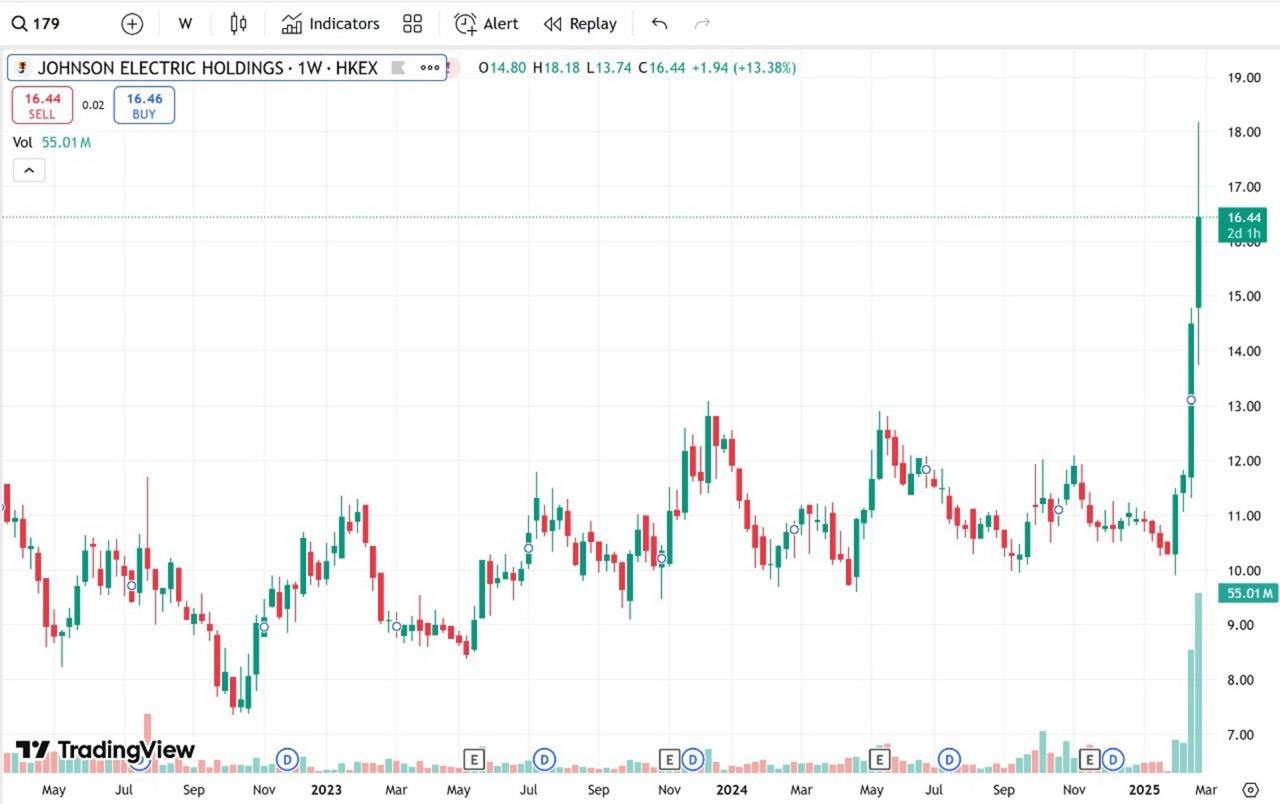
I wanted to share an example that underscores the importance of long-term temperament in investing. In my previous role, I covered one of the fund’s investments in Johnson Electric Holdings (179 HK), a Hong Kong-listed company primarily operating as an auto ancillary supplier, providing motors and other components to OEMs. The company also has an Industrial Products segment, which saw significant growth during the stay-at-home COVID period but experienced a demand normalization post-lockdown, while the auto segment maintained steady performance.
For the past three years, this family-controlled business traded within a HK$10-12 range, significantly underperforming global equities and largely being overlooked by the market. However, despite these headwinds, Johnson Electric consistently managed its margins, generated free cash flow, and strengthened its balance sheet.
Valuation Metrics Over the Last Three Years:
Throughout this period, the company remained deeply undervalued, as indicated by key financial ratios:
- Price-to-Sales: 0.4x
- Price-to-Book: 0.5x
- P/E Ratio: 6-8x
- EV/EBITDA: 2.5x
- Free Cash Flow Margin: High single digits
- Net Cash Balance Sheet: Maintained for almost two years
- Cash & Cash Equivalents: 40% of market capitalization
The Payoff of Patience:
After nearly three years of stagnation, the stock rallied 80% within February 2025 alone, rising from HK$10 to HK$18—even as broader global markets declined. The stock closed today at HK$16.30.
Throughout this period, my base case valuation remained consistent, estimating that the stock had the potential to double, with an intrinsic value of HK$21.
This case exemplifies how patience, a strong balance sheet, and a focus on fundamentals can eventually lead to outsized returns, even in the face of prolonged market neglect.
Legal Information and Disclosures
This blog is for informational and educational purposes only and should not be considered as investment, financial, or trading advice. The content does not constitute a recommendation or solicitation to buy, sell, or hold any securities, mutual funds, or financial instruments. Investors should conduct their own research and consult with a SEBI-registered investment advisor or financial professional before making any investment decisions. Past performance is not indicative of future results. All investments are subject to market risks.